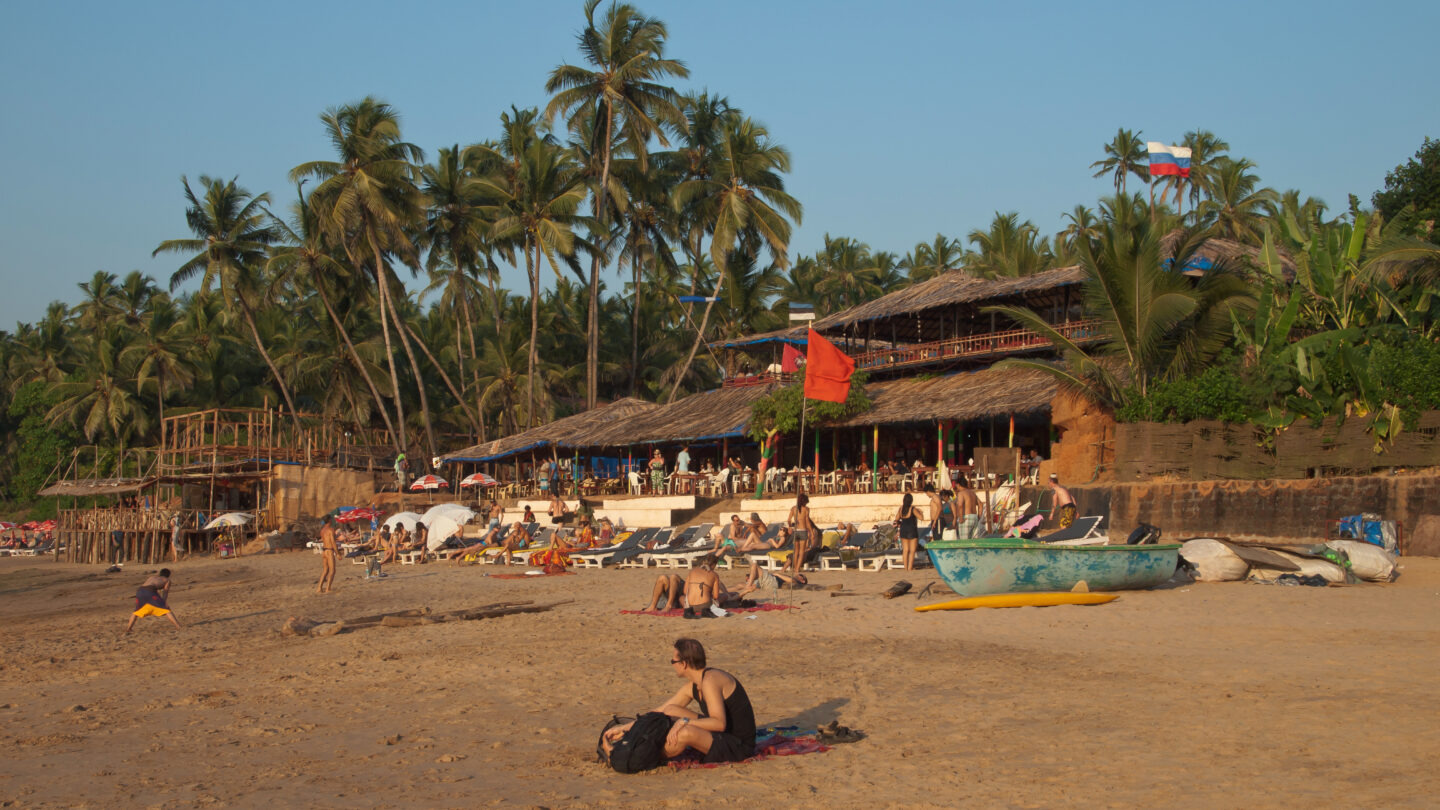
Why visit Goa
Goa is a small coastal state on the Arabian Sea with a long beach shoreline and a distinct history. It was a Portuguese territory until 1961, and that legacy shows in whitewashed churches, colourful houses and a cuisine that blends local and Portuguese flavours, from fish curry rice to pork vindaloo and the layered dessert bebinca.
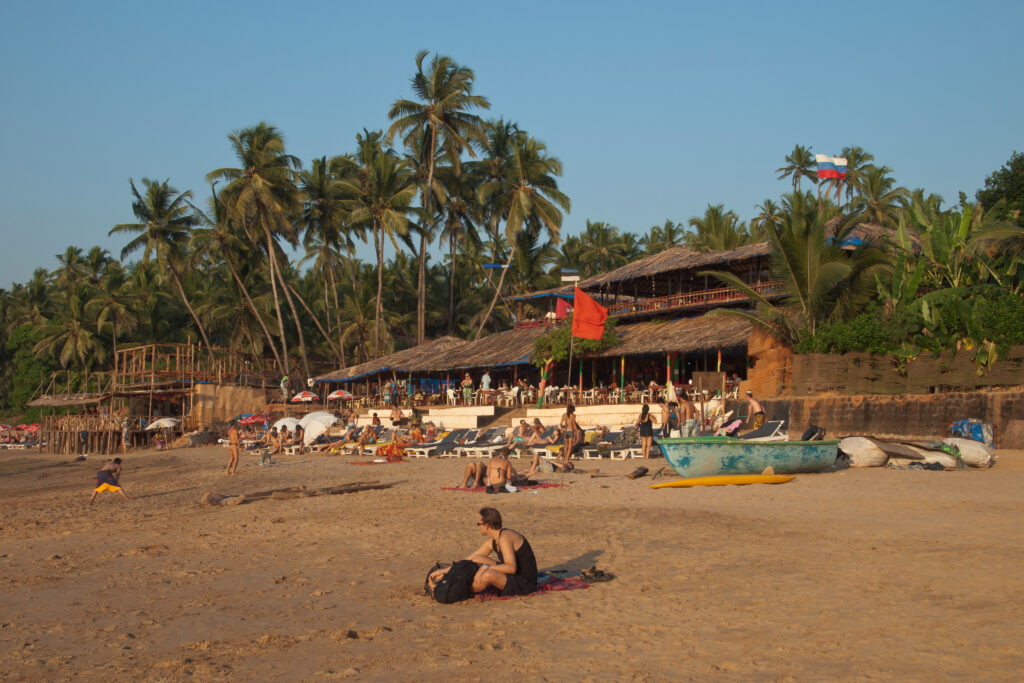
North Goa, around Calangute, Baga and Anjuna, is lively, with beach shacks, markets and nightlife. South Goa, around Palolem and Agonda, is quieter and suits longer, slower stays. Our North Goa vs South Goa comparison explains how to choose between them, and how to reach each side. Inland, Old Goa has grand churches including the Basilica of Bom Jesus, a UNESCO World Heritage Site, while the Fontainhas area of Panaji is known for its old Latin Quarter streets.

Goa suits several kinds of trip: a few days of beach rest after a busy tour of the north, a longer stay built around food and sunsets, or a slower look at the villages, spice farms and markets behind the coast. Many visitors are surprised by how green and quiet the inland areas feel compared with the busiest beaches, so it is worth planning at least one day away from the sand.
The main bases and what each is for
- Calangute, Baga and Candolim (North Goa): the busiest beach strip, with the most shacks, shops, water sports and nightlife. Good for a first visit if you want things to do within walking distance.
- Anjuna, Vagator and Arambol (North Goa): more of a hippie and party reputation, with cliffs, flea markets and cafes. Quieter pockets exist away from the main beaches.
- Panaji, Old Goa and Fontainhas (central Goa): the capital, the UNESCO-listed churches of Old Goa and the Latin Quarter. A day trip from either coast, or a base if you prefer heritage to beaches.
- Palolem, Agonda and Patnem (South Goa): crescent beaches, a slower pace and fewer crowds. Better for longer stays and for people who want quiet evenings.
- Colva, Benaulim and Varca (South Goa): long, flat beaches with a mix of resorts and village life, often chosen by families.
If you are undecided between the coasts, read our North Goa vs South Goa comparison first.
When to go
Goa is busiest in the dry season from roughly November to February, when days are warm and the sea is calm and most beach shacks are open. March to May is hotter and more humid. The monsoon, roughly June to September, brings heavy rain and rough seas; many shacks close and swimming is often restricted at the beaches, though prices drop and the countryside turns green. Dates shift from year to year, so check conditions before you book. Our best time to visit India tool shows how Goa compares with other regions month by month, and the festival calendar lists Carnival and other dates that affect crowds and prices.
Getting to Goa and getting around
Goa has two airports: Dabolim (GOI) in the south and Manohar International (Mopa) in the north, which opened in 2023. Which one is closer depends on where you are staying, so check the airport before you pick a flight. By train, the main stations are Madgaon (Margao) in the south and Thivim in the north, on the Konkan Railway; see our guides to flights vs trains in India, the train class chooser and booking train tickets as a foreigner.
Within Goa, most visitors use taxis, app-based cabs where available, or rented scooters. Taxi fares are often negotiated, so agree on the price before you set off. If you rent a scooter, you need a valid driving licence; foreign visitors are generally expected to carry an international driving permit with their home licence. Check current rules, wear a helmet, and take photos of the bike before you ride away.
Goa travel questions
How many days do you need in Goa?
Three to four days is enough for one coast and a day trip to Old Goa and Panaji. Five to seven days lets you split time between North and South Goa or slow down for a proper beach stay.
Is Goa good for people who do not drink?
Yes. Alongside the nightlife, there are quiet beaches, spice plantations, churches, forts, yoga and cooking classes. Choose a base away from the main party strips if you want calmer evenings.
Do I need to rent a scooter in Goa?
Not necessarily. Taxis and cabs work for most trips, and some beach areas are walkable. A scooter gives you freedom to explore, but it is also where many accidents happen, so only ride if you are experienced and properly licensed.
Is Goa safe for tourists?
Goa is a long-established tourist destination, but the usual precautions apply: keep valuables secure, avoid swimming in rough seas and after dark, agree prices in advance and be careful with unlicensed vehicle rentals. Our guide to safety for tourists in India has more detail.
Planning your Goa trip
- Choose your side of Goa first, because moving between north and south takes time on busy roads.
- Season: the weather chart below shows the peak beach months, and our monsoon travel guide explains what changes when the rains arrive.
- Book accommodation early for the Christmas and New Year period, when prices rise and rooms fill up.
- If you rent a scooter, check the local licence and helmet rules and your insurance cover. See our travel insurance guide.
- Check the festival calendar for Carnival dates.
Use the budget calculator below to estimate costs for your travel month and style.
Peak beach season is November to February. Monsoon (Jun–Sep) means rough seas and shut beach shacks, but lush green inland Goa and low prices.
- Best time
- January, February, November, December
- Also okay
- March, April, October
- Trip style
- Beaches & coast
- Daily budget (per person)
- ₹2,100+ backpacker · ₹4,000–₹8,000 mid-range
Month-by-month weather guide for Goa
Festivals and events
- February: Goa Carnival (Feb/Mar)
- December: Christmas & New Year
Festival dates often follow the lunar calendar and change every year. Confirm before booking.